Pages

Sunday, October 16, 2011

Making Natto!

Many years ago I tried natto at a Japanese restaurant. It's sticky, stringy texture and unfamiliar taste put me off instantly. I couldn't even mix it into rice to help disguise the weirdness of it.

Over the past 2 or 3 years, however, I have been trying and making just about any fermented food I have encountered. This has caused a change in my pallet, tastes and, I suppose, my tolerance for things that might taste strange, strong or rotten to other people. Honest, these things are really good once you get accustomed to them.

A few weeks ago I went to the 3rd annual Eat Real Festival and decided to have a sample of natto. I had a feeling that at this stage in my life, I may very well like it. And I did! It's still a bit weird, but the smokey, bitter, cheesy taste is just great and the nutritional benefits are quite unique.

I brought some home with me that day and decided that I would try and make some. Like many fermented or cultured foods (like yogurt, for example) , you can make it with some of the existing item. I found a great website called Natto King that explains the process and, oddly enough, it is almost exactly like making yogurt. You heat up the main ingredient (milk, beans etc), you add some of the existing ingredient (yogurt, natto), you mix it and keep at around 110 degrees for 24 hours.

I personally like the DIY approach. I had trouble finding any dried soybeans at the stores I usually frequent so instead I am using some local, Prim Manteca beans that were soaked overnight and steamed for an hour or so until soft, but still firm. I gently mixed the existing natto into the warm beans and placed the beans into two, quart jars and covered in foil.

I then put the mixture into a beer cooler, surrounded with hot water bottles. This was a little trick I learned in my yogurt making class and works like a charm. I recommend checking on the bottles a couple of times and refilling them with hot water.

It's still in the cooler "brewing" and I'm hoping it comes out really well. I'll keep you posted!

Sunday, October 9, 2011

History Round-Up

Early America

Unusual Facts About Christopher Columbus
With Columbus Day coming up next week, it's time to arm yourself with interesting facts about the man credited with discovering America.

Good/Bad Columbus: Was the European explorer a hero or menace?
Two lively new books give ammunition to both sides

The War of 1812
A new PBS documentary with stunning re-enactments, evocative animation and the incisive commentary of key experts, The War of 1812 presents the conflict that forged the destiny of a continent.

The film will be aired on 10/10/11 but is already available to view online - and there's a free app with an interactive guide to historic sites and battlefields! Geektastic.

Rome

Secrets of the Colosseum
A German archaeologist has finally deciphered the Roman amphitheater's amazing underground labyrinth. On this page you can also find a link to 5, interactive, 360 degree, panoramic views of the Colosseum and grounds.

Monday, September 5, 2011

Vintage CookBook #2: The Tassajara Bread Book

I have been baking bread for a number of years now - starting from one basic recipe and moving on to start making my own. Unlike many people, I imagine, one of my main goals with my bread baking has been to create a great sandwich bread. I'd had trouble finding the best technique for this and getting the texture I wanted had been my biggest challenge. The bread tasted great, but would often crumble in a sandwich scenario!

The Tassajara Bread Book, originally published in 1970, really does its best to encourage the reader to do their own thing - and treat baking and food preparation as a ritual. Bake with Love could have easily been the subtitle.

It was the recipe for making a Sponge that finally allowed for my sandwich bread breakthrough. The technique is a bit time consuming, but easy; more mixing and kneading, essentially. The easiness of this technique was surprising to me as it had been the first reference to this I had read. The internet is a great resource for recipes, but the era of the bread machine has made this old school / traditional / slow food knowledge a bit harder to find. Not that I have anything against the bread machine (OK, I kinda do...) as I appreciate anything that encourages people to make their own bread. But I am beginning to feel that the loving ritual of making bread is really the best part - other than that first bite, fresh out of the oven!

The Constitution - 2 Discussions

In July 2011, time magazine released it's 10th Annual History issue titled: "Does The Constitution Still Matter?" which includes the article One Document, Under Siege, by Richard Stengel. The article speaks about the current debates over the constitution and discusses major, current issues one-by-one.

One of my favorite podcasts, The Thomas Jefferson Hour, recorded a special episode as a companion and counterpoint to the article. The Thomas Jefferson Hour and the special episode, 931 - A Constitutional, are available for free on iTunes.

Saturday, August 27, 2011

Learning to Make and Love Kimchi


If my memory serves me right, it was my father that took me to my have my first taste of Korean cuisine when I was a teenager. I remember getting this strange cabbage dish. I remember thinking it was soggy and a bit moldy and I really didn't understand the thing I was eating: kimchi.

Needless to say, it's taken me a while to warm up to kimchi. For those of you who are reading this and have not tried it yet, mold is not a usual part of the deal but, with many fermented foods, it's a possibility.

So far, I have learned two, very different techniques for making kimchi at home. The first involves soaking chopped cabbage in well salted water for an hour or two, draining, adding things like ginger and chili flakes and allowing to ferment at room temperature for a few days before eating.

The second, and more traditional technique is a bit more involved. First, chop, salt and mix the vegetables and allow the salt to draw the liquid out for at least 2 hours. Separately, heat up rice flour mixed with cold water until it boils and has the consistency of pancake batter. Mix in chili paste and/or flakes to the warm liquid as well as some fish sauce. Once sauce is thoroughly mixed it should be added to the vegetables, mixed and packed into containers, making sure to pack down and remove any air bubbles. It can be eaten fresh or allowed to ferment at room temp for a few days or in the fridge. It can be kept and eaten for many months.

In different areas of Korea, fresh or salted fish can also be added. I am most especially interested in the idea of adding fresh oysters to the mix!

The second technique comes from Richie Nakano of Hapa Ramen in San Francisco. I was recently lucky enough to be a participant in his first pickling class along with his business partner, Susana Ok. The result of which is in the delicious photo above. You can see one of Richie's kimchi recipes online here.

Suddenly, I'm feeling hungry...

Resources:
Kimchi on Wikipedia
Handbook of vegetable preservation and processing
Korean Kimchi History

Saturday, July 23, 2011

A Must Watch: John Adams

I don't have cable. Heck, I don't have a television. So I often miss out on cool things to watch - at least when everyone else is watching them. I was recently told about the HBO miniseries, John Adams, staring Paul Giamatti. I've since watched half the episodes and have been quite moved by Paul's portrayal of Adams and, to be honest, the entire cast is quite fabulous.

I have been most intrigued by the part of Thomas Jefferson in this series. Mr. Jefferson has been an interest of mine for some time now - especially since my discovery of the Thomas Jefferson Hour. It was interesting to see him portrayed as well, frankly, aloof and somewhat self-centered. I've yet to see the series Jefferson, but am pretty curious about it.

Oh and in my wanderings online, I found these two interesting trailers!

*Thomas Jefferson Lives* trailer from Stephen Cognetti on Vimeo.


Wednesday, July 20, 2011

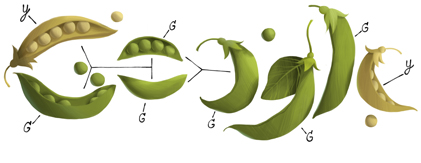
I scream, you scream, we all scream for PEAS.


I'm sure you don't need me to tell how about the cool Google graphic today. Peas for Gregor Mendel's 189th birthday! For those that don't know, Mendel as an Austrian friar and scientist, who gained posthumous fame as the founder of the new science of genetics for his study of the inheritance of certain traits in pea plants.

Learn more about Gregor Mendel.

Tuesday, July 19, 2011

Vintage CookBook #1: A World of Good Eating

I love browsing thrift store shelves in pursuit of lost culinary treasures. I particularly love finding interesting American cookbooks. The most recent of which is A World of Good Eating - Recipes From Around the World by Heloise Frost. Originally published in 1951, the book has chapters on the British Isles, China, France, Germany, Italy, Poland, Scandinavia and America.

Though I haven't tried out any of the recipes, there are a few that really caught my eye!

Irish Pork Cake (British Isles)
Broccoli with Mustard Mayonnaise (France)
Schwabisches Fleish (Germany)
Caraway Pork Chops (Poland)
Barszcz (Poland)
Anadama Bread (America)
California Orange Bread (America)
Tomato Soup Cake (America)

The tomato soup cake recipe seems to gross out all of my friends, and is one of the more unusual recipes in the book. So, Naturally, that's the one I'd like to try first. But for now, I'll share the recipe! If you're brave enough to give it a try, let me know!

Tomato Soup Cake

1 cup sugar
1/2 cup shortening
1 can tomato soup
2 cups sifted flour
2 teaspoons baking powder
1 teaspoon soda
1 teaspoon nutmeg, cinnamon and clove
2 eggs, beaten
1/2 cup chopped nuts
1/2 cup raisins or dates (floured)

Blend together the sugar and shortening. Add eggs, one at a time, and mix well; then the tomato soup.

Sift flour, baking powder, soda and the spices together and add to the rest of the ingredients. Bake at 375.

Frosting:
1 package cream cheese
2 teaspoons cream
1/2 teaspoon vanilla
1 1/2 cups powdered sugar